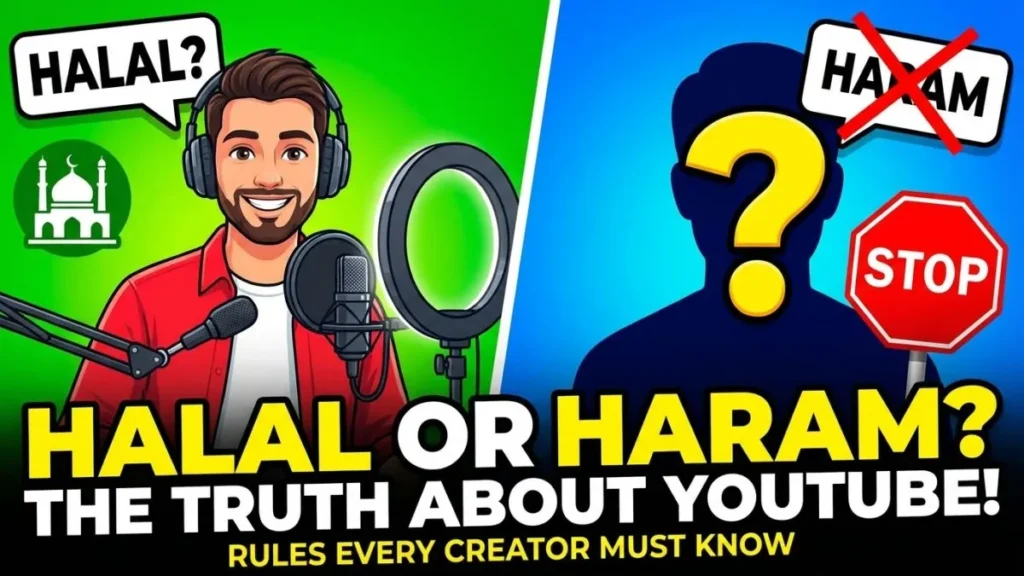
A halal career means your income comes from permissible sources. Your work doesn’t involve haram activities. And the way you earn respects Islamic principles.
For YouTubers, this breaks down into three main areas:
1. The content you create 2. How you monetize that content 3. The relationships you build (sponsors, collaborations)
Think of YouTube as a tool. A knife can be used to prepare halal food or to harm someone. The tool itself is neutral. What matters is your intention and your actions.
Most Islamic scholars agree that creating video content is permissible. The Prophet Muhammad (peace be upon him) encouraged sharing beneficial knowledge. YouTube is just a modern way to do that.
But here’s where it gets specific.
Why This Question Matters for Muslim Content Creators
I’ve seen too many Muslim YouTubers build entire channels, only to realize later they’ve been earning through questionable means.
One brother I know had 200,000 subscribers. He was making $5,000+ per month. Then he learned that some of his sponsors were promoting haram products. He had to cut ties and lost 40% of his income overnight.
That’s painful. And avoidable.
Understanding the Islamic rulings before you build your channel saves you from:
- Earning haram income that you’ll need to dispose of later
- Building an audience around content you’ll eventually need to delete
- Wasting years on a career path that conflicts with your values
- The guilt and stress of not knowing if your income is clean
Plus, there’s a bigger picture here.
Muslim YouTubers have massive influence. What you create shapes how millions see Islam. When you operate within Islamic boundaries while succeeding, you become living proof that you don’t need to compromise your faith to thrive.
Understanding YouTube Income: What’s Halal and What’s Not
Let me break down every income source on YouTube and give you clear rulings.
Ad Revenue (YouTube Partner Program)
This is the money YouTube pays you when ads run on your videos.
Ruling: Generally Halal with Conditions
According to most contemporary scholars, including those at Darul Uloom Deoband, ad revenue is permissible if:
- Your content itself is halal
- You don’t deliberately attract haram advertisements
- You’re not actively promoting the products in the ads
Here’s the reasoning: You’re being paid for views and engagement, not for promoting specific products. YouTube’s algorithm places ads automatically. You don’t have control over every single ad that appears.
However, you should:
- Use YouTube’s ad settings to block categories like alcohol, gambling, and dating apps
- Regularly review what ads appear on your videos
- If haram ads consistently appear, adjust your content or keywords
Pro tip: Go to YouTube Studio → Monetization → Ad Suitability → Brand Safety and block sensitive categories. This reduces haram ads significantly.
Sponsorships and Brand Deals
This is when companies pay you to promote their products.
Ruling: Depends Entirely on the Product
You need to screen every single sponsor. I mean every single one.
Clearly Haram Sponsorships:
- Alcohol brands (including beer, wine, spirits)
- Gambling sites and apps (casinos, sports betting, poker)
- Interest-based financial products (credit cards with interest, conventional loans)
- Dating apps that promote zina (unlawful relationships)
- Products with haram ingredients (pork-based foods, gelatin from non-zabiha sources)
- Adult content or services
- Music streaming services (according to stricter scholarly opinions)
Halal Sponsorships:
- Tech products (phones, laptops, software)
- Halal food and beverage companies
- Islamic financial services (Islamic banks, halal investment platforms)
- Clothing and fashion (as long as it meets Islamic modesty standards)
- Educational platforms and courses
- Fitness and health products (check ingredients)
- Travel services and tourism
The Gray Areas:
Some sponsorships require deeper research:
- Video games (avoid those with shirk, excessive violence, or haram elements)
- Meal kit services (ensure they offer halal meat options)
- Beauty products (check for haram ingredients like alcohol in cosmetics)
- General e-commerce platforms (they may sell both halal and haram items)
My advice? When in doubt, consult a scholar. Send them the product details. It’s worth the 30 minutes to protect your income.
Affiliate Marketing
This is when you earn commission by promoting products through special links.
Ruling: Same as Sponsorships
The product itself must be halal. The commission structure should be clear and transparent (no hidden terms that involve riba or gharar – excessive uncertainty).
Amazon Associates is generally permissible because:
- You’re earning a commission for a service (directing customers)
- The commission rate is clearly stated
- You’re not responsible for what else people buy on Amazon
But again, only promote halal products.
Channel Memberships and Patreon
This is when viewers pay monthly to support your channel.
Ruling: Halal if Done Correctly
You’re essentially providing a service (exclusive content, community access) in exchange for payment. This is a clear transaction.
Make sure you:
- Deliver the value you promise
- Don’t deceive viewers about what they’re getting
- Keep your exclusive content halal
Super Chats and Tips
These are direct donations from viewers during live streams.
Ruling: Generally Halal
This is considered a gift (hibah) in Islamic law. As long as you’re not doing anything haram to solicit these gifts, they’re permissible.
Some scholars say you should make it clear that these are voluntary and viewers shouldn’t feel obligated. That’s good practice anyway.
Selling Your Own Products or Courses
Ruling: Halal if the Product is Halal
This is straightforward business. If you’re selling:
- Digital courses on halal topics → Permissible
- Physical products that are halal → Permissible
- Services that don’t involve haram → Permissible
Just ensure your pricing is fair and your marketing is honest.
Content Guidelines: What You Can and Cannot Create
Now let’s talk about the videos themselves.
Clearly Halal Content
These types of videos are encouraged:
- Educational content that teaches beneficial skills
- Islamic knowledge (Quran recitation, hadith explanations, fiqh lessons)
- Technology reviews and tutorials
- Cooking with halal ingredients
- Travel vlogs that are modest and respectful
- Fitness and health content (following Islamic dress codes)
- Business and entrepreneurship advice
- Science and history content
- Parenting and family advice
- Home and lifestyle content (within Islamic boundaries)
I’ve seen Muslim YouTubers thrive in all these niches. Tech channels, cooking channels, Islamic education—all successful and 100% halal.
Clearly Haram Content
Stay away from:
- Music-focused content (according to the majority of scholars, especially Deobandi fiqh)
- Promoting relationships outside marriage (dating advice, pickup artist content)
- Mockery of Islam or any religion
- Content that spreads fitnah (discord among Muslims)
- Immodest content (inappropriate clothing, free mixing without necessity)
- Promoting haram products (alcohol, drugs, gambling)
- Astrology and fortune-telling
- Magic tricks that make people believe in supernatural powers
- Pranks that harm or humiliate people
The Gray Areas That Need Careful Consideration
1. Entertainment and Comedy
Comedy is generally permissible, but:
- No vulgar language or crude humor
- Don’t mock people’s appearance or disabilities
- Avoid excessive laughter that makes people forget Allah
- Don’t lie for the sake of humor (even fictional stories should be clear)
2. Gaming Content
Gaming can be halal, but you must choose games carefully:
- Avoid games with shirk (worshiping false gods, magic as a power source)
- Stay away from games with excessive gore or violence
- Don’t play games that normalize haram (GTA-style games with zina, alcohol, etc.)
- Time spent gaming shouldn’t take you away from obligations
Strategy games, sports games, and puzzle games are generally safer choices.
3. Reaction Videos
These are tricky. You’re watching someone else’s content and commenting on it.
Make sure:
- You’re not watching haram content just to react to it
- You’re adding significant commentary (not just “stealing” others’ work)
- You have proper fair use justification
- You’re not promoting the original if it’s problematic
4. Vlogs and Personal Content
Your daily life can be content, but:
- Maintain hijab and modesty standards
- Don’t show your spouse without their clear consent
- Protect your children’s privacy and future
- Keep private family matters private
I know a sister who runs a successful mom vlog. She shows her life but never shows her face, protects her kids’ identities, and focuses on valuable parenting lessons. It works beautifully.
Read more: 7 Powerful Facts: Can You Work in a Restaurant That Serves Pork as a Waiter or Chef?
The Technical Rules: How to Stay Halal in Practice
Let me give you the practical, day-to-day guidelines.
Rule 1: Control Your Background Music
This is huge for Deobandi fiqh followers.
If you hold the position that musical instruments are haram, you need alternatives:
- Use nasheed (vocal-only Islamic songs)
- Use nature sounds (rain, birds, ocean waves)
- Use sound effects that aren’t melodic
- Leave your videos without background music
Personally, I use vocal nasheeds and nature sounds. My retention rate hasn’t dropped at all.
Rule 2: Dress Code Matters
For brothers:
- Cover from navel to knee at minimum
- Professional appearance builds credibility
For sisters:
- Proper hijab if showing your face
- Some sisters choose not to show their face at all (voiceover style)
- Both approaches can work – choose what fits your comfort level
Rule 3: Be Honest in Thumbnails and Titles
Clickbait that lies is haram. It’s deception.
You can create curiosity, but don’t:
- Promise something your video doesn’t deliver
- Use misleading images
- Exaggerate to the point of falsehood
Remember, every viewer who feels deceived might lose trust in Muslims in general. That’s a big responsibility.
Rule 4: Protect People’s Privacy
- Get permission before filming others
- Blur faces of those who didn’t consent
- Don’t expose people’s faults or sins
- Backbiting in videos is still backbiting
Rule 5: Give Proper Credit
- Don’t steal others’ content
- Credit your sources
- Use images and music you have rights to
- Respect copyright laws (these align with Islamic principles of property rights)
Common Mistakes Muslim YouTubers Make
I’ve coached dozens of Muslim content creators. Here are the mistakes I see repeatedly:
Mistake 1: Not Reading Sponsor Contracts Carefully
A brother signed with a VPN sponsor. Seemed innocent. Then he discovered they were promoting themselves for accessing blocked adult sites.
Always read the full terms. Ask what else they promote. Google them thoroughly.
Mistake 2: Showing Too Much Personal Life
Your spouse, your kids, your home—these all have rights in Islam.
Just because YouTube culture is “share everything” doesn’t mean you should. I’ve seen marriages strained because one spouse felt overexposed.
Set boundaries early.
Mistake 3: Compromising for Growth
“Just this once” turns into a pattern.
One haram sponsorship won’t destroy your channel if you refuse it. But it will put barakah (blessing) at risk in your income.
I’ve seen channels that stayed strict on halal guidelines outgrow channels that compromised. The barakah is real.
Mistake 4: Ignoring the Comment Section
Your comment section is your responsibility to some degree.
If people are spreading wrong information about Islam, engaging in arguments, or saying haram things—you should moderate.
You don’t need to read every single comment on a viral video, but you should have some system in place.
Mistake 5: Forgetting Your Intention
This career can become about views, likes, and money really fast.
Renew your intention regularly. Are you doing this to:
- Educate people about Islam?
- Provide halal entertainment?
- Share beneficial knowledge?
- Support your family through halal means?
Or has it become about ego and fame?
Check yourself often.
Expert Tips for Building a Successful Halal YouTube Channel
Let me share what actually works.
Tip 1: Niche Down Around Halal Topics
The riches are in the niches. And there are underserved niches in halal content:
- Halal investing tutorials (stocks, real estate, Islamic finance)
- Muslim parenting in the West
- Islamic history documentaries
- Halal food reviews and cooking
- Tech reviews for Muslim consumers
- Islamic productivity and self-development
These topics have passionate audiences and plenty of halal monetization opportunities.
Tip 2: Build an Email List
YouTube owns your audience. One policy change and you could lose everything.
Collect emails through:
- Free downloadable guides
- Newsletter signups
- Exclusive content offers
This gives you direct access to your audience outside of YouTube’s control.
Tip 3: Diversify Your Income
Don’t rely only on ad revenue. Build multiple streams:
- Sponsorships (thoroughly vetted)
- Digital products (courses, ebooks)
- Consulting or coaching
- Affiliate commissions (halal products only)
- Speaking engagements
This protects you if one income source drops.
Tip 4: Network with Other Halal Creators
There’s a growing community of Muslim YouTubers who want to stay halal. Connect with them:
- Share opportunities
- Vet sponsors together
- Collaborate on content
- Support each other’s growth
I’m in a group chat with 15 other Muslim creators. We share which sponsors to avoid, which are solid, and how to negotiate better deals.
Tip 5: Invest in Quality
You don’t need expensive gear to start. But as you grow, invest in:
- Better audio (people forgive bad video, not bad audio)
- Good lighting (makes you look professional)
- Editing software (or hire an editor)
Quality signals that you take your content seriously.
Tip 6: Be Consistent
The YouTube algorithm rewards consistency. Pick a schedule you can maintain:
- Once a week is great for most niches
- Twice a week if you have the capacity
- Even once every two weeks works if the quality is high
Just stick to it. Your subscribers will learn when to expect your content.
Real Examples of Successful Halal YouTube Channels
Let me show you this works.
Example 1: Islamic Education Channel
A brother started teaching basic fiqh lessons. Simple setup, just him and a whiteboard.
After 18 months:
- 85,000 subscribers
- $2,000-3,000 monthly from ads
- Regular halal sponsorships from Islamic bookstores and apps
- Sells his own fiqh course for $97
Total halal income: $5,000-7,000 per month.
Example 2: Halal Cooking Channel
A sister who never shows her face. Voiceover only, filming her hands while cooking.
After 2 years:
- 150,000 subscribers
- $3,000-4,000 from ads
- Sponsorships from halal food brands
- Affiliate income from kitchen tools
- Her own halal recipe ebook
Total halal income: $6,000-8,000 per month.
Example 3: Muslim Finance Channel
A brother teaching halal investing and personal finance.
After 3 years:
- 250,000 subscribers
- $5,000-6,000 from ads
- High-paying sponsorships from Islamic banks and halal investment platforms
- Sells an investing course
- Does paid consulting
Total halal income: $15,000-20,000 per month.
All of these creators could make more if they compromised. They get offers for haram sponsorships regularly. But they refuse, and Allah provides them with halal alternatives.
Pro Tip: The Halal Sponsor Database Strategy
Here’s something I wish I’d known earlier.
Create a spreadsheet of vetted halal sponsors in your niche. Include:
- Company name
- What they sell
- Why they’re halal (or why they’re not)
- Contact information
- Rate they typically pay
Whenever you find a good halal company (even if they’re not sponsors yet), add them.
When you’re ready for sponsorships, you have a ready list to reach out to. You’re not scrambling when a haram offer comes in.
This has helped me maintain 100% halal income while growing. I have 50+ companies in my database. I reach out to them, not the other way around.
How to Handle Common Challenges
Let me address the tough situations you’ll face.
Challenge 1: “Everyone Else Is Doing It”
Other YouTubers take haram sponsorships. They use copyrighted music. They compromise.
Remember: You’re not everyone else.
You’re a Muslim trying to please Allah first. That might mean slower growth. But it also means barakah and peace of mind.
I’d rather make $3,000 halal than $10,000 haram. The haram money won’t bring blessings to your life or family.
Challenge 2: Family Pressure to Make More Money
Maybe your family doesn’t understand why you’re turning down lucrative deals.
Explain your reasoning. Show them you have a plan for halal income. Sometimes you need to be patient while building the halal revenue streams.
If you’re just starting and not making much yet, consider keeping a part-time job until your halal YouTube income is stable.
Challenge 3: Conflicting Scholarly Opinions
Different scholars give different rulings on some issues.
Choose a qualified scholar or school of thought (madhab) and follow their guidance consistently. For this article, I’m primarily referencing Deobandi fiqh, but you should follow whichever authentic scholarship you trust.
Don’t shop around for the easiest fatwa. That’s deceiving yourself.
Challenge 4: The Algorithm Doesn’t Favor Your Content
Sometimes halal content doesn’t go viral as easily. Content with music, drama, or controversy often performs better.
Accept this as part of your test. Focus on:
- Providing genuine value
- Building a loyal community
- Creating evergreen content that stays relevant
- Improving your skills constantly
Slow, steady growth is better than explosive growth on haram foundations.
Actionable Steps to Start Your Halal YouTube Journey
If you’re ready to begin or want to make your existing channel fully halal, follow these steps:
Step 1: Define Your Halal Niche
Choose a topic that’s:
- Permissible in Islam
- Something you’re knowledgeable about
- Has an audience willing to watch
- Has halal monetization potential
Write down 3-5 niche ideas and evaluate each one.
Step 2: Audit Your Current Content (If Applicable)
If you already have a channel:
- Review every video for haram elements
- Delete or private videos that are clearly haram
- Make a plan to phase out questionable content
- Inform your audience about your new direction
Yes, this might hurt your stats temporarily. But it’s necessary.
Step 3: Set Up Your Channel with Halal Guidelines
- Write down your content rules
- Set up ad category blocking in YouTube Studio
- Create templates for contracts (to ensure halal terms)
- Decide on your dress code and presentation style
Step 4: Create Your First 10 Videos
Don’t overthink it. Just start creating:
- Focus on providing value
- Keep them simple
- Get comfortable on camera (or with voiceover)
- Learn as you go
Step 5: Build Your Halal Sponsor List
Research companies in your niche:
- Are their products/services halal?
- Do they sponsor content creators?
- What are their values?
Save this information for when you’re ready to reach out.
Step 6: Engage with the Muslim Creator Community
- Follow other halal content creators
- Comment on their videos
- Join Muslim creator groups on Discord or Facebook
- Share knowledge and opportunities
Step 7: Stay Educated on Islamic Rulings
- Read books on Islamic business ethics
- Follow reliable scholars who understand modern issues
- Ask questions when you’re unsure
- Attend classes or webinars on fiqh of new media
Step 8: Measure and Adjust
Every month, review:
- What content performed best
- Which income sources are working
- Whether you maintained your Islamic standards
- What you need to improve
Frequently Asked Questions
Is earning money from YouTube ads halal?
Yes, earning from YouTube ads is generally halal according to most contemporary scholars, including those at Darul Uloom Deoband, as long as your content itself is permissible and you block haram ad categories in your settings. You’re being paid for views and engagement, not for directly promoting the products in the ads. However, you should regularly monitor what ads appear and adjust your content if consistently haram ads show up.
Can I use background music in my videos if I’m trying to be halal?
This depends on your scholarly position. According to Deobandi fiqh and many mainstream scholars, musical instruments are not permissible. If you follow this position, use alternatives like vocal nasheeds, nature sounds, or sound effects instead. Some contemporary scholars allow certain types of music, but the safer position is to avoid it. Many successful Muslim YouTubers create engaging content without any background music.
Are gaming channels halal for Muslim content creators?
Gaming channels can be halal, but you must carefully select games. Avoid games that contain shirk (worship of false gods), excessive violence, normalization of zina (fornication), alcohol, gambling mechanics, or magic portrayed as a real power. Strategy games, sports games, educational games, and puzzle games are generally safer options. Also ensure gaming doesn’t take you away from your religious obligations or consume excessive time.
How do I know if a sponsor is offering a halal deal?
Before accepting any sponsorship, research the company thoroughly. Check if they sell haram products (alcohol, gambling services, interest-based loans, adult content, etc.). Read reviews to understand their business practices. Ask them directly what they promote and how they position themselves. Get the contract reviewed by someone knowledgeable in Islamic finance if possible. When in doubt, consult a scholar. It’s better to turn down a deal than earn haram income.
Can sisters run YouTube channels while maintaining hijab?
Absolutely. Many successful Muslim women run YouTube channels while maintaining proper hijab. Some show their faces with full hijab, while others create content using voiceovers only, showing their hands during cooking or tutorials. Both styles can be equally successful. Choose what aligns with your understanding of hijab and what you’re comfortable with. Focus on providing value, and your audience will appreciate your content regardless of format.
What should I do if I realize my past content or income was haram?
First, sincerely repent to Allah and make the intention not to repeat it. Delete or private the haram content from your channel. If you earned money from clearly haram sources, dispose of that amount by giving it to charity (without expecting reward). You don’t need to calculate exact amounts—estimate and give that charity. Then move forward with halal content only. Many successful Muslim YouTubers have made this transition, and their channels continue to grow with barakah.
Is it permissible to show my family in vlogs?
You can include family in your vlogs, but you must respect their rights. Get clear permission from your spouse before showing them on camera. Be very careful about showing children—protect their privacy and future. Many scholars advise against showing young children’s faces publicly. Keep private family matters private and don’t expose your family to negative attention or harassment. Set clear boundaries about what’s shared and what remains private.
Can I accept Super Chats and donations from viewers?
Yes, Super Chats, donations, and tips are generally permissible as they’re considered voluntary gifts (hibah) in Islamic law. However, make it clear these are voluntary and viewers shouldn’t feel obligated. Don’t promise specific duas or religious rewards in exchange for donations, as this can become problematic. Accept them as support for your work, and provide value to all viewers regardless of whether they donate.
How do I deal with negative comments or hate on my channel?
Moderate your comments section actively, especially when discussing Islamic topics. Delete comments that spread misinformation about Islam, contain vulgar language, or are clearly meant to cause discord. You’re not obligated to engage with every critic. Block persistent trolls. However, do engage respectfully with genuine questions and constructive criticism. Remember that responding with good character is part of dawah. Don’t let hate drag you into arguments—stay dignified.
What if my channel grows and I need to hire editors or team members?
Hiring help for your channel is permissible and often necessary as you grow. Make sure employment contracts are clear and fair according to Islamic principles. Pay wages on time. If hiring someone to edit videos, ensure they understand your halal content guidelines. Many Muslim YouTubers build teams while maintaining Islamic ethics. You can even make it a point to hire from within the Muslim community, supporting others while building your business.
Final Thoughts: Building a YouTube Career That Pleases Allah
Let me leave you with this.
Being a YouTuber can absolutely be a halal, blessed career. I’ve seen it transform lives—allowing people to earn good income while spreading beneficial knowledge, helping others, and staying true to Islamic principles.
But it requires commitment.
You’ll face tempting offers for haram sponsorships. You’ll see others compromise and succeed faster. You might grow slower than channels that don’t have moral boundaries.
Stay firm anyway.
The money earned through halal means, even if it’s less, will have barakah. It will feel different. Your family will benefit from it. And you’ll be able to make dua with confidence knowing your income is pure.
Remember these key principles:
- Your content must be halal – educate, entertain, or inform within Islamic boundaries
- Your income sources must be halal – vet every sponsor, every product, every deal
- Your character must reflect Islam – be honest, humble, and beneficial to others
- Your intention must stay pure – renew it regularly, don’t let ego take over
Start small if you need to. Upload your first video even if it’s imperfect. Build your audience one subscriber at a time. Focus on providing real value.
And whenever you face a difficult decision—a lucrative but questionable opportunity—remember that Allah is Ar-Razzaq, The Provider. He doesn’t need haram means to provide for you.
Trust Him, do what’s right, and watch how He opens doors you never imagined.
May Allah grant you success in this world and the next, and may He make your YouTube career a source of ongoing reward (sadaqah jariyah) that benefits you even after you’re gone.