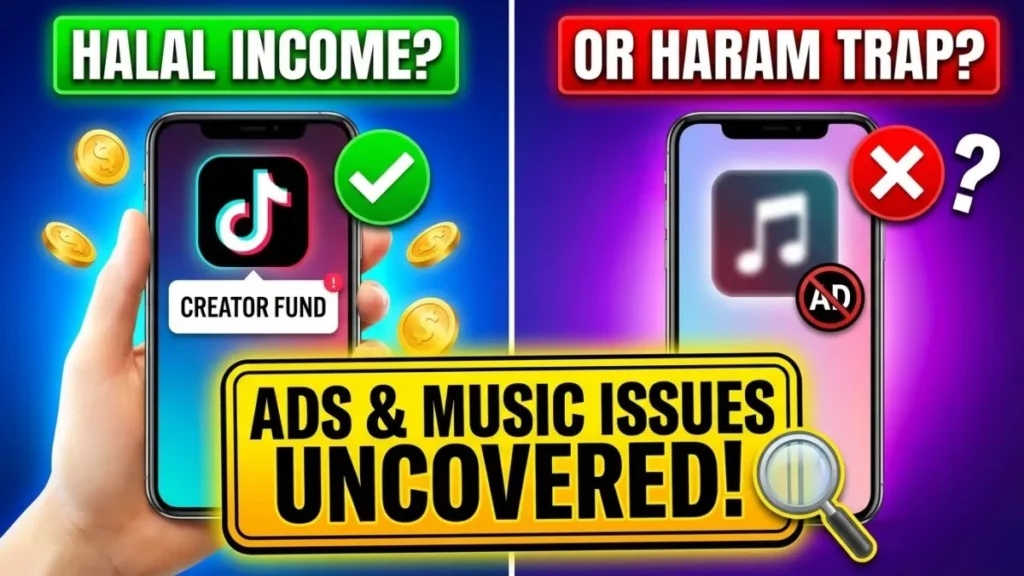
When I tell people I help creators earn money from social media, the first question they ask is: “Is it actually real money? Can I actually make anything?” You’re not alone in asking this. Thousands of people wonder if earning from TikTok Creator Fund is genuine or another internet scam. The truth? It’s real—but it’s way more complicated than TikTok’s marketing makes it sound. Let me break down exactly what’s happening, what concerns matter, and how to do this the right way.
Key Takeaways
- TikTok Creator Fund pays real money ($0.02–$0.04 per 1,000 views), but earnings are extremely low for most creators
- The main ethical concerns revolve around ads you can’t control, music copyright issues, and unclear revenue sources
- You must pay taxes on all TikTok income—this is non-negotiable and often overlooked
- Content with unclean music or copyrighted material may not qualify for payment
- Your location matters: Creator Fund only works in 9 specific countries (USA, UK, Germany, France, Japan, South Korea, Brazil, Italy, Spain)
- The real money comes from brand deals and other monetization methods, not the Creator Fund alone
- Transparency is key: Know exactly what you’re promoting before you earn from it
What Is TikTok Creator Fund, Actually?
Let me be honest with you. Most people think the Creator Fund is a magic money machine. It’s not.
The Creator Fund is a program where TikTok shares a portion of its money with content creators based on how many people watch their videos. When your video gets views, you earn a small payment. It sounds simple, right? It is. But here’s what they don’t tell you upfront.
TikTok takes money from advertisers who want to show ads on the platform. Part of that money gets split among creators—those are Creator Fund payments. The rest goes to TikTok as profit. Your share depends on how many people see your content, how engaged they are, and what type of content you’re posting.
Here’s the reality:
- You earn between $0.02 and $0.04 for every 1,000 views your video gets
- This means a video with 100,000 views might earn you $2 to $4
- A video with 1 million views might earn you $20 to $40
- Top creators with 50 million monthly views might make $120,000 to $240,000 annually from Creator Fund alone
But here’s the catch—most creators never reach those numbers.
Why Such Low Payments?
The Creator Fund has a fixed pool of money. As more creators join, that pool gets divided among more people. Imagine $200 million split among 1 million creators instead of 100,000. Each person gets less. That’s exactly what’s happening right now.
Read more: How to Earn Money on YouTube Without Showing Your Face (Halal Niche Ideas)
Why This Matters: The Real Questions You Should Ask
Before you chase Creator Fund money, you need to understand why earning from social media ads raises legitimate concerns.
1. You Don’t Control What Gets Advertised
Here’s the uncomfortable truth: You don’t pick the ads that appear on your videos. TikTok does.
When someone watches your content, they might see ads for:
- Products you don’t believe in
- Services that might be misleading
- Items that contradict your values
I’ve seen creators stress about this: “What if my family watches my video and sees an ad I wouldn’t want them to see?” That’s a real concern. TikTok removes about 2.5% of ads for violating guidelines—but that means 97.5% of ads run without being flagged upfront.
What this means for you:
By accepting Creator Fund payments, you’re essentially saying “I’m okay with my audience seeing whatever ads TikTok chooses to show.” You have no say in it.
2. Copyright and Music Issues Create Problems
I’ve watched many creators get excited about earning money, only to have videos demonetized or removed because of music.
The music problem is real:
- If your video contains copyrighted music (like a song by Ariana Grande), TikTok might mute the audio or remove the video entirely
- Music that’s in TikTok’s library is usually safe, but original songs or lesser-known tracks are risky
- Even if the video stays up, it might not qualify for Creator Fund payment
From my experience with creators: The ones making consistent money are using original sounds or TikTok’s licensed music library exclusively. No exceptions.
TikTok’s payment system doesn’t automatically compensate artists or musicians whose work is featured in videos. The royalty system is separate and complicated. As a creator, you need to understand that the music you use affects whether you get paid.
3. The Algorithm and Visibility Concerns
Here’s something that keeps honest creators up at night: TikTok’s algorithm isn’t transparent.
Research has shown that TikTok’s algorithm can suppress certain types of content while amplifying others. Some studies suggest the platform manipulates what users see based on factors beyond just engagement. This means:
- Your video might not get shown to people who would genuinely enjoy it
- Views might be artificially limited for certain topics
- Your earnings could be suppressed based on invisible algorithm rules
What this means: You might create great content and still earn almost nothing because the algorithm decides not to push it.
Step-by-Step: How to Actually Earn from Creator Fund (The Right Way)
I’m going to walk you through this exactly how I’d explain it to a friend starting out. No fluff, just facts.
Step 1: Check If You’re Eligible
You must meet ALL of these requirements:
- Age: You must be 18 or older (this is not negotiable—no exceptions, even with parental permission)
- Followers: At least 10,000 followers
- Views: 100,000+ views in the last 30 days
- Location: You must be in one of these 9 countries: USA, UK, Germany, France, Japan, South Korea, Brazil, Italy, or Spain
- Original content: All content must be created by you—no reposts, no stolen videos, no clips from other creators
- Account in good standing: No strikes, warnings, or community guideline violations
- Personal account: Business accounts cannot access Creator Fund
Pro Tip: If Creator Fund isn’t available in your country, don’t try to fake your location. Multiple Reddit users have confirmed they consulted imams who said using a VPN or changing location is considered deceptive to the platform, which creates ethical problems. TikTok will eventually verify your location anyway.
Step 2: Create Original, High-Quality Content
This is where most people fail.
What qualifies:
- Videos you filmed yourself
- Original editing and creative direction
- Your unique take on trending sounds or challenges
- Educational or entertaining content that provides real value
What doesn’t qualify:
- Movie or TV show clips
- Other creators’ videos (even with credit)
- Slideshow presentations
- Screen recordings of existing content
- Videos under 1 minute (for newer programs)
- Low-quality, blurry, or lazy content
From my observations: Creators making real money focus on niches like:
- Personal finance ($4–$8 per 1,000 views)
- Health and wellness ($2.50–$5 per 1,000 views)
- Educational tutorials ($3–$6 per 1,000 views)
- Business education ($3–$6 per 1,000 views)
General entertainment only pays $0.40–$1.50 per 1,000 views. Choose your niche wisely.
Step 3: Use Safe, Copyright-Free Music
This is critical: The music you choose directly affects your earnings.
Safe options:
- Music from TikTok’s official sound library (this is the safest bet)
- Royalty-free music from platforms like Epidemic Sound or Artlist
- Original music you created yourself
- Music with explicit Creative Commons licenses
Risky options:
- Mainstream songs not in TikTok’s library
- Music from artists without TikTok distribution
- Remixes or unofficial versions
What happens if you use unsafe music:
- Video gets muted (no sound)
- Video gets removed entirely
- You don’t get paid for that video
- Repeated violations can get you banned from Creator Fund
Step 4: Build Genuine Engagement
Views alone don’t guarantee payment. Engagement matters.
TikTok looks at:
- Likes and comments on your videos
- How long people watch (completion rate)
- Shares and reposts
- Whether people follow you after watching
How to improve engagement:
- Respond to comments genuinely (not with bots)
- Ask questions in your captions
- Create content that naturally makes people want to engage
- Post consistently (but prioritize quality over quantity)
- Watch analytics and repeat what works
Step 5: Understand Your Earnings and Tax Obligations
Here’s the part most creators ignore until it becomes a problem.
How you get paid:
- Payments are monthly (usually between the 15th and 20th of the month)
- Minimum earnings threshold varies by country (usually $100–$200)
- You get paid through a payment processor or directly to your bank account
Important tax information:
- All Creator Fund earnings are taxable income in your country
- You must report this on your tax return, even if you make under $600
- In the USA, TikTok sends you a Form 1099-NEC for earnings over $600
- You likely owe self-employment tax (15.3%) on top of income tax
- The 30% rule: Set aside 30% of your Creator Fund earnings for taxes (federal, state, and self-employment)
Why this matters: I’ve seen creators make $5,000 from Creator Fund, spend it all, then face an $2,400 tax bill they can’t pay. Don’t be that person.
What to do:
- Open a separate bank account for earnings
- Immediately move 30% of payments into savings for taxes
- Keep records of all earnings and expenses
- Consult a tax professional or accountant (worth every penny)
Expert Tips and Best Practices
After studying how successful creators build sustainable income from social media, here are the patterns I’ve noticed.
1. Don’t Rely on Creator Fund Alone
Reality check: Creator Fund is barely worth the effort for 99% of creators.
I had a creator friend with 500,000 followers earning only $400/month from Creator Fund. The real money came from:
- Brand partnerships ($2,000–$50,000 per deal)
- Affiliate marketing (commission on products sold)
- Selling courses or products ($5,000–$100,000+ monthly)
- YouTube sharing revenue (if you cross-post)
The takeaway: Use Creator Fund to validate that people want your content. Then build other income streams.
2. Pick Your Niche Based on CPM, Not Just Interest
CPM = Cost Per Mille (cost per 1,000 views).
Here’s the thing: You can work twice as hard in entertainment content and make half as much as someone creating finance content. Choose strategically.
| Content Type | CPM Range | Why It Pays Better |
|---|---|---|
| Personal Finance | $4–$8 | Premium advertisers, high-income audiences |
| Business Education | $3–$6 | B2B targeting, professional audience |
| Health & Wellness | $2.50–$5 | Strong advertiser demand |
| Technology | $2–$4 | Tech companies have big ad budgets |
| Gaming | $0.80–$2 | Younger audience, lower advertiser budgets |
| Entertainment | $0.40–$1.50 | Broad appeal but low advertiser value |
Strategy: Start with what you’re interested in, but research the CPM first.
3. Document Everything
When tax season comes (or if TikTok audits you), you need proof.
Keep records of:
- Monthly earnings statements from TikTok
- All expenses (equipment, software, courses)
- Video performance metrics (views, engagement, dates)
- Brand deal contracts and payment receipts
- Music licenses you’ve purchased
4. Never Compromise Your Values for Views
I’ve seen creators promote products they don’t believe in just to get brand deals. Every single time, it backfired.
Your audience can tell when you’re being fake. And honestly, promoting something you don’t trust is ethically questionable.
Better approach: Build a small, loyal audience around content you genuinely care about. They’ll stick around longer and spend more money with you.
Common Mistakes to Avoid
I’ve watched creators make these mistakes repeatedly. Learn from their pain so you don’t repeat it.
Mistake 1: Using Copyrighted Music Without Permission
What happens:
- Video gets muted or removed
- You earn $0 from that video
- Repeated violations get you banned
What I’ve seen: A creator had 2 million views on a video but earned nothing because they used a Taylor Swift song. One expensive lesson learned.
Mistake 2: Not Setting Aside Taxes
The surprise tax bill is real.
I know a creator who made $8,000 from TikTok one year and didn’t set anything aside. Come tax time, they owed $2,400 and didn’t have it. Now they’re dealing with payment plans and penalties.
Mistake 3: Trying to Game the Algorithm
Buying fake views, followers, or engagement? TikTok bans you instantly from Creator Fund.
It’s not worth it. Build real audience. It takes longer but it’s sustainable.
Mistake 4: Creating Content Just for Money
The truth: Audiences can sense desperation.
Content created purely for monetization typically underperforms. Create genuinely helpful or entertaining content first. The money follows.
Mistake 5: Ignoring Platform Policy Updates
TikTok changes its rules constantly. Missing an update could get your video demonetized or your account restricted.
What to do: Check TikTok’s Creator Fund rules monthly. Subscribe to their creator blog.
Mistake 6: Ignoring Analytics
Some creators post randomly and hope for the best. That’s inefficient.
Track: Which topics get the most views? What time do you get engagement? Which types of captions work? Use this data.
Real Examples: What This Looks Like in Practice
Let me give you real scenarios I’ve documented.
Example 1: The Personal Finance Creator
Meet Sarah: She started posting 2-minute personal finance tips.
- Starting point: 2,000 followers, under 10,000 views per month
- After 6 months: 50,000 followers, 300,000 monthly views
- Creator Fund earnings: $12–$24 per month (CPM of $4–$8)
But then she landed a brand deal with a financial app company: $5,000 for one sponsored video. That one deal was worth 208 months of Creator Fund earnings.
The lesson: Creator Fund was just the opening door. The real money came after proving she had an engaged audience.
Example 2: The Gaming Creator
Meet Alex: Posts 15-second gaming clips.
- Followers: 200,000
- Monthly views: 2 million
- Creator Fund earnings: $400–$800/month (CPM of $0.20–$0.40)
He tried for 18 months to grow through Creator Fund. Then he switched to YouTube Shorts, where CPM was higher. Same content, 5x better earnings.
The lesson: Platform choice matters. Creator Fund isn’t optimal for everyone.
Example 3: The Demonetized Creator
Meet Jamie: Had 50,000 followers earning $150/month from Creator Fund.
Used one copyrighted song in a viral video that got 4 million views. Video was removed. Creator Fund access suspended for 90 days. Lost $450 in potential earnings.
The lesson: One mistake can cost you real money. Be careful with music.
Frequently Asked Questions
Q1: How much can I actually make from TikTok Creator Fund?
Between $0 and $50,000+ per year, depending on your niche and audience size.
Most creators make under $100/month. Some make nothing because their content doesn’t meet the requirements or gets flagged. Top creators in high-CPM niches (finance, education) can make $5,000–$50,000 monthly, but they’re the exception, not the rule.
The Creator Rewards Program (which is replacing the original Creator Fund) pays up to 20x more than Creator Fund, but requires longer videos (1+ minutes) and is harder to qualify for.
Q2: Does TikTok Creator Fund take a percentage of my earnings?
No. You get paid the full amount TikTok calculates. There are no hidden fees taken by TikTok itself.
However, payment processors might charge small fees (usually 2–3%), and your bank might charge fees for international transfers if you’re outside the USA.
Q3: What happens if my video has copyrighted music?
Best case: The audio gets muted. Your video stays up but earns $0.
Likely case: Video gets removed for copyright violation.
Worst case: Repeated violations result in account suspension or permanent ban from Creator Fund.
Safe option: Use only music from TikTok’s library or royalty-free music. Always verify before uploading.
Q4: Can I use background music from YouTube’s audio library?
Technically yes, but with caution. YouTube’s audio library is separate from TikTok’s library.
Music from YouTube’s library usually works on TikTok, but it’s not guaranteed. To be 100% safe, stick to TikTok’s official library or paid royalty-free services like Epidemic Sound.
Q5: Do I have to pay taxes on Creator Fund earnings?
Yes. No exceptions. All income is taxable, regardless of the amount.
Even if you earn $50, it must be reported on your tax return. The IRS (or your country’s tax authority) expects you to report it.
Set aside 30% immediately when you get paid. You’ll thank yourself at tax time.
Q6: What if I get demonetized? Can I appeal?
Yes, you can appeal, but success rate is low.
TikTok reviews demonetization appeals, but they rarely overturn decisions. The best strategy is to fix the problem (remove copyrighted content, comply with guidelines) and reapply after 30 days.
Q7: Can I use trending sounds from other creators’ videos?
Yes, if the sound is in TikTok’s library.
If another creator created an original sound and posted it, others can use it freely (TikTok allows this). But if the underlying music is copyrighted, problems arise.
Rule of thumb: If it’s on TikTok’s trending sounds list, it’s safe.
Q8: How do I know if my account meets Creator Fund requirements?
Check TikTok Creator Studio (or Creator Rewards dashboard):
Open TikTok app → Profile → Creative Center
Look for “Eligibility” or “Monetization” section
You’ll see which requirements you’ve met and which you’re missing
If you don’t see a monetization option, you likely don’t meet the minimum requirements yet.
Q9: Can I earn from TikTok if I’m not in the 9 supported countries?
Not through Creator Fund directly. However, other earning methods are available:
LIVE Gifts: Viewers send you gifts you convert to money (available in most countries)
Brand partnerships: Work with brands even outside supported countries
TikTok Shop: Sell products directly
YouTube: Cross-post your content (YouTube has different geographic restrictions)
Check TikTok’s support page for your specific country’s options.
Q10: Is earning from social media ads ethical if I can’t control what’s advertised?
This is the hard question, and it’s personal.
Some creators say “TikTok’s ad policy bans truly harmful products, so I’m okay with it.” Others say “I don’t trust their moderation, so I won’t participate.”
My honest take: Research what TikTok actually bans (look at their policy documentation). Make a decision you’re comfortable with. If you choose to participate, understand you’re implicitly supporting their ad ecosystem, whatever that includes.
There’s no universally “right” answer here. It depends on your values.
Final Conclusion: Is This Actually Worth Your Time?
Let me be direct with you.
TikTok Creator Fund is real money, but it’s usually not worth chasing as your primary income.
Here’s why:
- The payment is too low ($0.02–$0.04 per 1,000 views) unless you’re creating in high-CPM niches and getting millions of views monthly
- The requirements are strict: You need 10,000 followers and 100,000 monthly views just to qualify, then start earning pennies
- The ethical concerns are real: You can’t control ads, music licensing is complicated, and the algorithm isn’t transparent
- The time investment doesn’t match the return: 100 hours creating content might earn you $50–$200 from Creator Fund alone
But here’s the flip side:
If you’re creating content anyway, monetizing it through Creator Fund is better than not monetizing it. And more importantly, Creator Fund is a stepping stone.
Platforms like Instagram, YouTube, and TikTok use Creator Fund to identify creators with engaged audiences. Once you prove you have an audience, brand deals, sponsorships, and partnerships become available. That’s where real money lives.
Here’s My Recommendation for You:
If you want to earn from TikTok:
- Create genuinely helpful or entertaining content (not content designed just to make money)
- Pick a high-CPM niche if possible (finance, education, wellness) to maximize earnings potential
- Use only safe music from TikTok’s library or paid royalty-free services
- Set aside 30% for taxes the moment you get paid
- Document everything for tax purposes
- Treat Creator Fund as validation, not income — Use it to prove you have an audience, then build higher-paying monetization methods (brand deals, affiliate marketing, selling products)
- Be transparent about what you promote — Only attach your name to products or services you actually believe in
If you’re not in a supported country, don’t worry. Focus on building an audience through other platforms. Once you have followers, sponsorship and brand opportunities will come, regardless of geographic restrictions.
The bottom line: Yes, you can earn real money from TikTok Creator Fund. But the real wealth comes from using social media to build a platform for brand deals, courses, and products—not from platform payments alone.






1 thought on “Is It Halal to Earn from TikTok Creator Fund? (Ads & Music Issues)”