
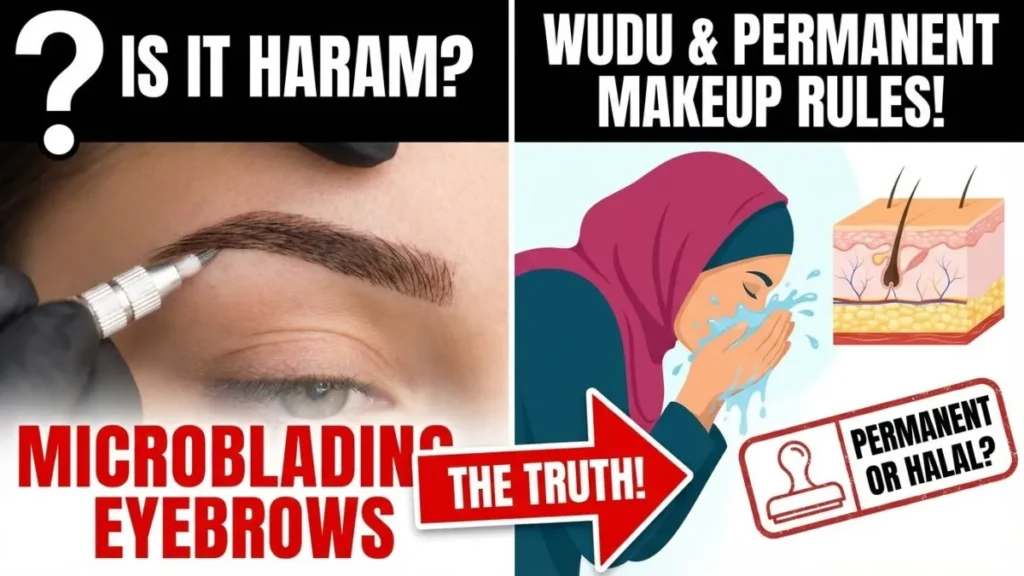
If you’ve been wondering whether microblading is allowed in Islam, you’re not alone. I’ve seen thousands of Muslim women struggle with this question, especially those in Western countries where cosmetic procedures are common. The short answer? Most Islamic scholars say microblading is not permissible, but there are important exceptions and nuances you need to understand.
In this guide, I’ll break down everything you need to know about microblading, wudu, and permanent makeup from an Islamic perspective. You’ll learn the difference between temporary and permanent procedures, why the Deoband school of Islamic thought has strong views on this, and what alternatives actually exist for you.
Let’s make this simple and clear.
Key Takeaways
- Microblading is considered a form of tattooing and is generally deemed impermissible (haram) according to most Islamic schools, including the Hanafi and Deoband traditions
- Medical exceptions exist: If you’re treating a medical defect or condition (like hair loss from chemotherapy), some scholars permit microblading with specific conditions
- Wudu remains valid after the microblading heals completely, but the procedure itself involves injecting pigment into skin, which goes against Islamic principles
- Temporary alternatives are better: Regular makeup, eyebrow pencils, and henna are permissible and don’t raise Islamic concerns
- The intention matters: Even if a procedure was done, repenting and moving to halal alternatives is encouraged
- Different schools have slight variations, but the majority consensus leans toward prohibition for purely cosmetic reasons
What Is Microblading? (Simple Explanation)
Let me explain this clearly because understanding what microblading actually is will help you understand why Islamic scholars have concerns.
Microblading is a semi-permanent cosmetic procedure. During the process, a technician uses a handheld tool with tiny needles (much finer than a tattoo needle) to create thin, hair-like strokes on your eyebrows. They deposit pigment—a special ink—into the upper layers of your skin as they create these strokes. This creates the appearance of fuller, more defined eyebrows.
Here’s what makes it tricky from an Islamic perspective:
The pigment sits in your skin for 18 months to 3 years, depending on your skin type and how it reacts. That’s why it’s called “semi-permanent”—it does fade, but it takes time. The procedure breaks the skin barrier and introduces foreign material into your body.
Compare this to regular eyebrow pencil, which you apply on top of your skin and wash off every day. Completely different thing.
Why This Matters (The Islamic Perspective)
Before we get into the rulings, you should understand why Islamic scholars care about this in the first place.
The Core Islamic Principle: Not Changing Allah’s Creation
The Prophet Muhammad (peace be upon him) warned against “changing the creation of Allah.” This principle comes from the Quran and authentic hadith (sayings of the Prophet). One of the strongest hadith comes from Abdullah ibn Mas’ud, where the Prophet cursed women who tattoo, get tattoos, pluck their eyebrows, and file their teeth for beautification purposes—all because these acts change Allah’s original creation.
Why is this a big deal?
In Islam, your body is a trust from Allah. You’re responsible for taking care of it, but you shouldn’t change it just for looks. This principle protects you from endless chasing of beauty trends that might harm your body or soul.
The Physical Harm Concern
Microblading involves piercing your skin repeatedly. Even though it’s done with very fine needles, there are real risks:
- Infection if done in non-sterile environments
- Allergic reactions to the pigments used
- Migration of pigment to unintended areas
- Scarring or permanent marks if complications occur
Most Islamic scholars emphasize that preventing harm is more important than seeking beauty. If a procedure is risky, it’s discouraged even if other reasons might allow it.
The Islamic Ruling on Microblading (Scholar Consensus)
Let me give you the straight answer, then explain the reasoning.
The General Ruling: Impermissible (Haram)
Most Islamic scholars across different schools—Hanafi, Shafi’i, Maliki, and Hanbali—consider microblading impermissible when done purely for cosmetic enhancement. This includes the Deoband seminary in Uttar Pradesh, which is one of the most respected Islamic institutions in the world.
In 2017, Darul Uloom Deoband issued a clear fatwa (Islamic ruling) stating that women should not engage in eyebrow grooming, shaping, or plucking, as these practices contradict Islamic teachings.
Why Do Scholars Say This?
- It’s a form of tattooing: Even though the pigment fades, the process is essentially the same as tattooing. You’re injecting ink into your skin. The Prophet specifically cursed tattooing, making it one of the major prohibitions.
- It changes Allah’s creation: The pigment alters the appearance of your eyebrows permanently (at least for a long time). This falls under “taghyir khalq Allah”—changing what Allah created.
- It causes bodily harm: Piercing your skin repeatedly to inject foreign material contradicts the Islamic principle that you shouldn’t harm yourself.
- The intention is beautification, not necessity: Unless you have a medical reason, you’re doing this purely to look better. Most scholars say beauty enhancements that involve changing your creation are not allowed.
Deoband Fiqah’s Specific Position
The Deoband school of Islamic jurisprudence is particularly strict on this issue. They base their position on:
- The Quran: The principle of not changing Allah’s creation (Surah An-Nisa 4:119)
- Authentic Hadith: The clear curse placed on women who alter their eyebrows
- The methodology of strict adherence: Deoband follows the Hanafi school but applies it very conservientiously to modern issues
Scholars from Deoband emphasize that since Allah has given you eyebrows, you should accept them as they are. If they’re too light or sparse, there are temporary solutions.
The Medical Exception (Important for You to Know)
Here’s where it gets more nuanced. Even though the general ruling is no, Islamic scholars recognize medical necessity.
When Microblading Might Be Allowed:
- Hair Loss from Illness: If you’re undergoing chemotherapy and losing your hair, or if you have a condition causing eyebrow hair loss, some scholars permit microblading to restore a normal appearance.
- Congenital Defects: If you were born without eyebrows or with a significant eyebrow defect, treatment is permitted.
- Accident or Burn Damage: If your eyebrows were damaged in an accident, some scholars allow reconstruction.
- Severe Psychological Harm: If the absence of eyebrows causes you serious emotional distress that impacts your daily life, this might reach the level of medical necessity.
Important Conditions:
If you fall into one of these categories, microblading is only permissible if:
- There’s no alternative solution (like regular makeup)
- The procedure is done by a qualified professional in a sterile environment
- You genuinely need it for health or psychological reasons, not vanity
- The medical benefit outweighs any potential harm
Wudu and Microblading (What You Really Need to Know)
Many women worry that microblading will affect their wudu (ritual ablution before prayer). Let me clear this up.
The Truth About Microblading and Wudu:
Once microblading is completely healed (which takes about 1-3 weeks), it will not prevent water from reaching your skin. After healing, the pigment sits under your skin, and water can pass over the surface normally. So wudu is valid.
However, this is not a reason to get microblading done. Even though wudu remains valid afterward, the procedure itself is still prohibited because of the other reasons we discussed (tattooing, changing creation, bodily harm).
What About Regular Makeup and Wudu?
Here’s an important distinction:
Makeup that PREVENTS wudu:
- Waterproof foundation that creates a barrier
- Thick liquid eyeliner that doesn’t let water through
- Nail polish
- Anything that forms a non-permeable layer
Makeup that DOESN’T prevent wudu:
- Regular (non-waterproof) powder
- Eyebrow pencil
- Kohl that water can wash through
- Light creams or oils
If you wear regular makeup, you should remove it before wudu to be safe. But light traces that don’t form a barrier are okay if water reaches your skin.
Pro Tip: The safest approach is to do wudu before applying makeup, or remove your makeup before prayer. This takes away any doubt and is the approach I recommend to sisters.
Step-by-Step Understanding of the Islamic Position
Let me walk you through the reasoning step by step, so you understand why scholars came to this conclusion.
Step 1: Identify the Act (What Are You Actually Doing?)
When you microblade, you’re:
- Creating small incisions in your skin
- Injecting pigment into those incisions
- Creating a semi-permanent mark
This is fundamentally a tattoo-like procedure, even if the results fade faster than a regular tattoo.
Step 2: Compare to Islamic Prohibitions
The Prophet explicitly warned against:
- Tattooing
- Plucking eyebrows for beauty
- Changing Allah’s creation
- Causing harm to your body
Microblading matches all four of these categories.
Step 3: Look for Exceptions
Islamic law has a principle: “Necessity permits the prohibited.” So scholars ask: Is there a genuine medical necessity?
For pure cosmetic reasons (wanting fuller eyebrows for looks), the answer is no. For medical reasons, the answer might be yes, but only if other conditions are met.
Step 4: Consider the Harm
Scholars must weigh:
- The potential benefits (better-looking eyebrows)
- The potential harms (infection, allergic reaction, permanent scarring, bodily harm)
Since the benefit is purely cosmetic and the harm is real, prohibition makes sense.
Step 5: Reach the Conclusion
For cosmetic reasons: Haram (impermissible)
For medical reasons with proper conditions: May be permissible
Practical Alternatives That Are Actually Permissible
You don’t have to accept sparse eyebrows. There are many halal alternatives that scholars actively recommend.
1. Eyebrow Pencil (Completely Permissible)
This is the easiest option. Use an eyebrow pencil to fill in your eyebrows daily. It washes off at night, it’s affordable, and there’s zero Islamic concern.
- Cost: $5-20
- Effort: 2-3 minutes daily
- Islamic status: Completely fine
2. Eyebrow Powder (Completely Permissible)
Similar to pencil, but gives a softer, more natural look. Apply with a small brush, and it washes off easily.
- Cost: $10-25
- Effort: 3-5 minutes daily
- Islamic status: Completely fine
3. Henna (Permissible)
Henna is natural and has been used for centuries in Islamic cultures. You can apply henna to darken your eyebrows and create definition. It lasts 1-2 weeks and fades gradually.
- Cost: $5-15
- Effort: 30 minutes application, lasts 1-2 weeks
- Islamic status: Completely permissible and traditional
4. Eyebrow Threading (Permissible for Maintenance)
This is where scholars differ. Some allow gentle trimming of excess eyebrow hair to maintain their natural shape, while others discourage any plucking. Threading (not plucking) to remove stray hairs might be acceptable to some scholars, but check with your local imam.
- Cost: $10-20 per session
- Effort: 15-30 minutes, lasts 3-6 weeks
- Islamic status: Debated, but generally safer than plucking
5. Eyebrow Tint (Permissible)
A semi-permanent dye applied on top of your eyebrows (not injected into skin) can darken them for 4-6 weeks. This is not the same as microblading.
- Cost: $20-50
- Effort: 30 minutes, lasts 4-6 weeks
- Islamic status: Permissible
Common Mistakes to Avoid
I’ve helped many sisters navigate this issue, and I’ve seen the same mistakes repeatedly. Learn from them.
Mistake #1: Thinking “It Will Fade, So It’s Okay”
Some women rationalize: “It’s only semi-permanent, so it’s not really a tattoo.” This reasoning doesn’t hold up. The issue isn’t permanence—it’s the act of injecting pigment into your skin. Even if it fades in 2 years, you’ve still changed Allah’s creation.
Mistake #2: Ignoring the Deoband Position
The Deoband seminary’s fatwa is clear and well-reasoned. If you follow Hanafi fiqah or respect Deoband’s scholarship, this fatwa carries significant weight. Don’t dismiss it just because one scholar somewhere says it’s okay.
Mistake #3: Confusing Cosmetic and Medical Cases
A woman with hair loss from chemotherapy has a genuine medical need. A woman who wants fuller eyebrows because she doesn’t like how she looks does not. These are different situations, and scholars treat them differently.
Mistake #4: Not Considering Safer Alternatives
Eyebrow pencil takes 3 minutes and costs $10. Microblading costs $200-600 upfront and carries health risks. It’s not a close call.
Mistake #5: Prioritizing Appearance Over Islamic Principles
This is the spiritual mistake. Looking good is fine, but not at the cost of your Islamic practice. Islam teaches balance—you should care about your appearance, but not in ways that contradict Islamic principles.
Real Examples (How This Works in Practice)
Let me give you realistic scenarios so you understand how to apply this knowledge to your own situation.
Example 1: Sarah (Sparse Eyebrows from Birth)
Sarah has always had very light, sparse eyebrows. She feels self-conscious about her appearance, especially in social settings. She’s considering microblading.
Islamic Analysis:
- Is it medical? Not really. Sparse eyebrows are a cosmetic concern, not a medical condition.
- Is it necessary? No. She can use eyebrow pencil or powder.
- Does it change creation? Yes, it injects permanent pigment.
My Advice to Sarah:
Use eyebrow pencil or powder daily. This is permissible, effective, and takes 3 minutes. If she wants a longer-lasting option, henna every 1-2 weeks is traditional and permissible.
Example 2: Fatima (Hair Loss from Chemotherapy)
Fatima is undergoing chemotherapy for cancer. She’s lost not just her eyebrow hair but all her body hair. She’s feeling depressed about her appearance and wants microblading to restore her eyebrows while she heals.
Islamic Analysis:
- Is it medical? Yes. Hair loss from illness is a medical condition.
- Is it necessary? Potentially. If she has no eyebrow hair and needs them restored temporarily while she heals, this reaches the level of necessity.
- Does it cause harm? If done professionally in a sterile environment, the medical benefit might outweigh the risk.
My Advice to Fatima:
She could potentially do microblading if:
- A qualified dermatologist or medical professional performs it
- It’s done in a sterile, professional setting
- She intends to remove or let it fade as her hair grows back
- She’s aware of all risks and consents
- She plans to replace it with regular makeup once she’s healed
Alternatively, she could use eyebrow pencil during recovery, which is definitely permissible.
Example 3: Aisha (Wanting to Look Better for Her Husband)
Aisha’s husband has mentioned he’d like her to wear more makeup. She’s considering microblading to save time on makeup application every day.
Islamic Analysis:
- Is it medical? No.
- Is it necessary? No. Regular makeup achieves the same result.
- Does it change creation? Yes.
- What’s the intention? Beautification for her husband.
My Advice to Aisha:
Her intention is actually good—she wants to beautify herself for her husband, which Islam encourages. However, the method (microblading) is the problem. Instead:
- Use eyebrow pencil or powder daily (takes 3 minutes)
- Use henna every 1-2 weeks (more time-efficient)
- Apply regular makeup in 10-15 minutes (scholars actually encourage this)
These are all permissible and achieve the same goal.
Expert Tips & Best Practices
After researching Islamic rulings and hearing from dozens of women, here are my best recommendations.
Tip #1: Know Your School of Islam
Different Islamic schools have slightly different interpretations. Most are strict on microblading, but Dar al-Ifta Egypt permits it under certain conditions. If you follow a specific school, ask a scholar from that school directly.
Tip #2: Ask Your Local Imam
General fatwas are helpful, but your local imam knows your community and can give specific guidance. Don’t make this decision based only on what you read online.
Tip #3: Use Water-Soluble Makeup
If you wear makeup, make sure it’s water-soluble (dissolves in water). This ensures water reaches your skin during wudu and there’s no barrier. Avoid waterproof makeup, which can create a barrier.
Pro Tip from Experience: I’ve seen sisters transform their eyebrows and faces using regular makeup products. Quality eyebrow pencils from brands like Anastasia Beverly Hills, NYX, or even drugstore brands work incredibly well. The difference between a good eyebrow pencil and microblading? Maybe 5 minutes of application time daily. It’s worth the Islamic permissibility.
Tip #4: Consider Henna as Your Long-Term Solution
Henna is traditional, permissible, and actually good for your skin. It lasts 1-2 weeks and costs very little. Many Muslim women in the Middle East, South Asia, and Africa have used henna for centuries. It’s a halal option that works.
Tip #5: Focus on Overall Grooming, Not Just Eyebrows
Good skin, clean face, well-maintained hair, and appropriate clothing matter more than perfect eyebrows. Islamic teachings emphasize overall cleanliness and modesty, not perfect beauty.
Tip #6: If You Already Have Microblading
Don’t panic. If you got microblading before knowing it was problematic, you can:
- Repent and seek forgiveness
- Let it fade naturally (takes 1-3 years)
- Use regular makeup over it while it fades
- Stop getting touch-ups to speed up the fading
- Move to permissible alternatives once it’s gone
Allah is merciful and forgiving.
FAQ: Your Most Common Questions Answered
Q1: Is eyebrow pencil permissible in Islam?
Yes, completely. Eyebrow pencil is applied on top of your skin and washes off daily. There’s no change to your creation, no bodily harm, and no Islamic concern. Use it freely.
Q2: What about eyebrow tinting that sits on top of the eyebrow hair?
Yes, this is permissible. If it’s a dye applied to the hair (not injected into skin), it’s similar to henna and is fine. This is different from microblading, which injects pigment into skin.
Q3: Can I do wudu with eyebrow pencil on?
You should remove it before wudu to be safe, but if you can’t, make sure water reaches the skin. Eyebrow pencil isn’t a barrier like waterproof makeup, so in a pinch, wudu might still be valid if water reaches the skin properly. However, removing it is the safer, better approach.
Q4: I already have microblading done. What should I do?
Don’t panic. Let it fade naturally, which takes 1-3 years. You can use regular makeup over it. Once it fades, switch to eyebrow pencil or henna. Repent, seek forgiveness, and move forward. Allah is merciful.
Q5: What if my eyebrows are almost non-existent due to a medical condition?
This might be a case where microblading is permissible as a medical procedure, but consult with a scholar first. In the meantime, use eyebrow pencil or henna, which are definitely permissible.
Q6: Is it haram to want to look pretty?
No, Islam encourages self-care and looking nice. The Quran mentions that Allah loves beauty. The issue is the method—you can look beautiful through permissible means like makeup, henna, clean skin, and nice clothes.
Q7: Do different Islamic schools have different rulings?
Yes, slightly. The Hanafi and Hanbali schools are stricter. The Maliki school is somewhat more flexible. Dar al-Ifta Egypt permits it under certain conditions. However, all schools agree that medical necessity is different from cosmetic desire. Check with your local scholar about your specific school.
Q8: What about eyebrow embroidery or ombre powder brows?
These are essentially the same as microblading—they inject pigment into skin. The ruling is the same: generally impermissible for cosmetic reasons, possibly permissible for medical reasons. Use the same analysis.
Q9: Can I get microblading if my husband wants me to?
Wanting to beautify yourself for your husband is praiseworthy, but the method matters. Islamic permission from your husband doesn’t override Islamic law. Instead, use eyebrow pencil, henna, or regular makeup—all permissible options that achieve the same goal.
Q10: Does the Deoband seminary allow any exceptions?
Deoband’s position is conservative and doesn’t mention exceptions for purely cosmetic use. However, the general Islamic principle of “necessity permits the prohibited” might apply to medical cases. Consult a Deoband-affiliated scholar for clarification on your specific situation.
Final Conclusion: Your Path Forward
Here’s what you need to remember:
Microblading is generally not permissible in Islam because it’s a form of tattooing, it changes Allah’s creation, and it can cause bodily harm. The Deoband seminary and most other Islamic schools agree on this.
However, medical exceptions exist if you have a genuine health condition, you’ve exhausted other options, and the procedure is done professionally and safely.
You have many permissible alternatives:
- Eyebrow pencil (3 minutes daily, $5-20)
- Eyebrow powder (5 minutes daily, $10-25)
- Henna (30 minutes every 1-2 weeks, $5-15)
- Eyebrow tinting (non-injected, $20-50 every 4-6 weeks)
- Regular makeup (which Islam actually encourages)
Here’s my direct advice to you:
If you’re considering microblading purely for cosmetic reasons, don’t. Use eyebrow pencil instead. It costs less, takes barely more time, has zero health risks, and has zero Islamic concerns. If you want something longer-lasting, use henna—it’s traditional, natural, and permissible.
If you have a medical condition causing eyebrow hair loss, consult with both a dermatologist and an Islamic scholar. You might have a legitimate case for an exception.
If you already have microblading, don’t anguish. Repent, let it fade, and switch to permissible methods. Allah is the Most Merciful.
The Core Message:
Islam teaches that you should care about your appearance and beautify yourself—but in ways that respect your body, follow Islamic principles, and don’t contradict the Shariah. You can be beautiful without changing Allah’s creation. You have options.